

My Genogram
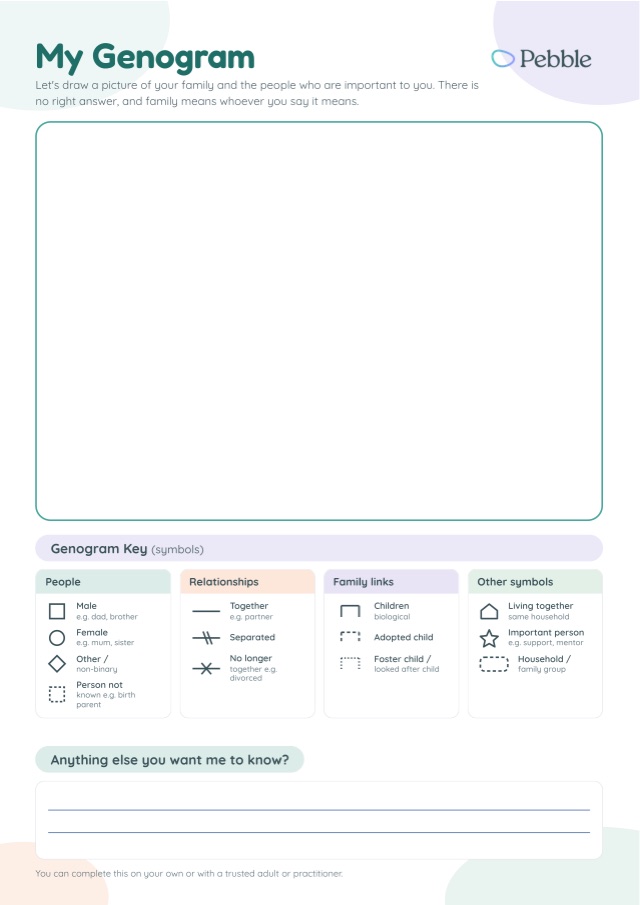
A large space to draw the family, with the genogram key written in plain words underneath and room at the bottom for anything else a child wants an adult to know.
Free to download and print. Nothing to pay, no account needed.
What it is for
Asking a child who everybody is takes a long time and produces a paragraph. Drawing it together takes minutes and produces something you can both point at. That is the whole argument for a genogram, and it is why this sheet is mostly empty space.
The sheet opens by settling the question children most often get wrong with adults: “There is no right answer, and family means whoever you say it means.” A child who puts a neighbour in and leaves a parent out has not made a mistake. They have told you something.
When the paper runs out of room, or the family is bigger than a sheet, Pebble Genogram draws the same symbols on a canvas and exports a clean copy for the file. The sheet and the software use the same key on purpose, so a child who has filled one in will recognise the other.
Using it in a session
- Draw it with them, not for them. Your pen on their sheet changes whose family it is. Ask, and let them put the shape down.
- Let the key stay a key. It is there to be looked at when they want it, not worked through. A child who draws circles and squares the wrong way round has still drawn their family.
- Who lives together is often the useful part. The household box gets at something a list of names does not: who the child actually wakes up near.
- Important person covers the people who are not relatives. A neighbour, a coach, a friend’s mum. These names rarely appear on a file and often matter most.
- The bottom box is not a formality. “Anything else you want me to know?” is where children put the thing they could not work out how to draw.
A genogram records who a child says is in their family and how they are connected. It is not an assessment, and an absence on the page is not a finding. It is a place to start asking, and what follows is your judgement.
What is on the sheet
- A large open space to draw the family
- A key in plain words: male, female, other or non-binary, and a person not known
- Together and separated
- Children, adopted children, and foster or looked after children
- Living together in the same household
- Important people who are not family
- Anything else you want me to know?
Fifty-one worksheets, all free
Built in practice by a working social worker, for children, young people and the people around them. New sheets are added as they are needed.
See the full libraryFree worksheet
Where shall I send the next one?
The worksheets are free, and always will be. Leave your email and I’ll send you each new one as it’s added — direct work tools, and the occasional idea from practice. Nothing else, ever.
One list. New worksheets only. Unsubscribe any time.